CHT Security’s Dual-track Strategy: Empowering Security with AI, Protecting AI with Security
As AI becomes ubiquitous, enterprises are facing a new breed of cybersecurity threats. In response, CHT Security has proposed a dual strategy: "Empowering Security with AI" and "Protecting AI with Security," advocating the use of AI technology to proactively combat AI risks and provide comprehensive protection for corporate digital transformation.
Jeff Hung, General Manager of CHT Security, pointed out that for enterprises, AI is no longer a choice of "whether to adopt," but has entered the critical stage of "how to effectively implement and realize value." The core motivations are threefold: empowering employees to increase productivity, optimizing processes to enhance efficiency, and creating innovative applications to explore new business opportunities.
Five Major Concerns in Enterprise AI Transformation
The widespread adoption of AI applications has simultaneously elevated cybersecurity risks. President Jeff Hung noted that enterprises face five core risks and challenges during AI adoption, which represent the primary concerns for management driving transformation:
- Shadow AI: Employees using unauthorized AI tools creates security blind spots, exponentially increasing the risk of data leaks.
- Data-Derived Risks: Unlike traditional software that processes data through code, the core of AI lies in data-driven model training and continuous learning. Without proper controls, sensitive corporate data can easily be leaked during the learning process.
- Over-reliance: AI models still suffer from "hallucinations," which can mislead decision-making and lead to actual physical or financial damage.
- Lack of AI Governance: Enterprises often neglect foundational regulations in the pursuit of results, lacking guidance from international AI risk management standards such as ISO 42001 (AIMS) or ISO 23894.
- Uncontrolled AI Agents: AI agents capable of autonomous task execution can become difficult to control if clear permissions and monitoring mechanisms are not established.
Jeff Hung suggests that before adopting AI, enterprises should establish robust security systems and cybersecurity processes to ensure they can respond calmly to threats or difficulties by following standard operating procedures. Citing the NIST CSF (Cybersecurity Framework) IPDRR framework (Identify, Protect, Detect, Respond, Recover), he stated that adhering to IPDRR standards enhances a company's cyber resilience. Hung further offered a symbolic metaphor: cybersecurity should not be viewed as the "act of braking" that hinders efficiency, but rather as the "braking system" that empowers an enterprise to pursue excellence at full speed with confidence.
AI Empowerment and Protection: CHT Security’s Four Major Solutions
Combining years of expertise, CHT Security has implemented its dual-track strategy of "Empowering Security with AI" and "Protecting AI with Security." To meet enterprise needs, the company offers the following four solutions:
- AI-Empowered SOC Monitoring Service: Integrates the self-developed Security Risk Management (SRM) platform with various monitoring and response systems to provide a unified grasp of corporate risks and security insights.
- AI Access Security: Includes Internet Security, Security Fleet (HiNet UTM), and SASE services, providing granular cloud AI application access control for different scenarios.
- AI Application Security Assessment Service: Based on the latest OWASP Top 10 for LLM, this service provides vulnerability reports (including risk levels, reproduction steps, and remediation suggestions) that serve as a basis for corporate compliance and internal audits.
- GenAI Security Assessment Service: Specifically designed to identify and evaluate three core risks in Generative AI applications (AI hallucinations, biased output, and data leakage), ensuring that while AI assists business operations, it remains compliant with security regulations and Trustworthy AI principles.
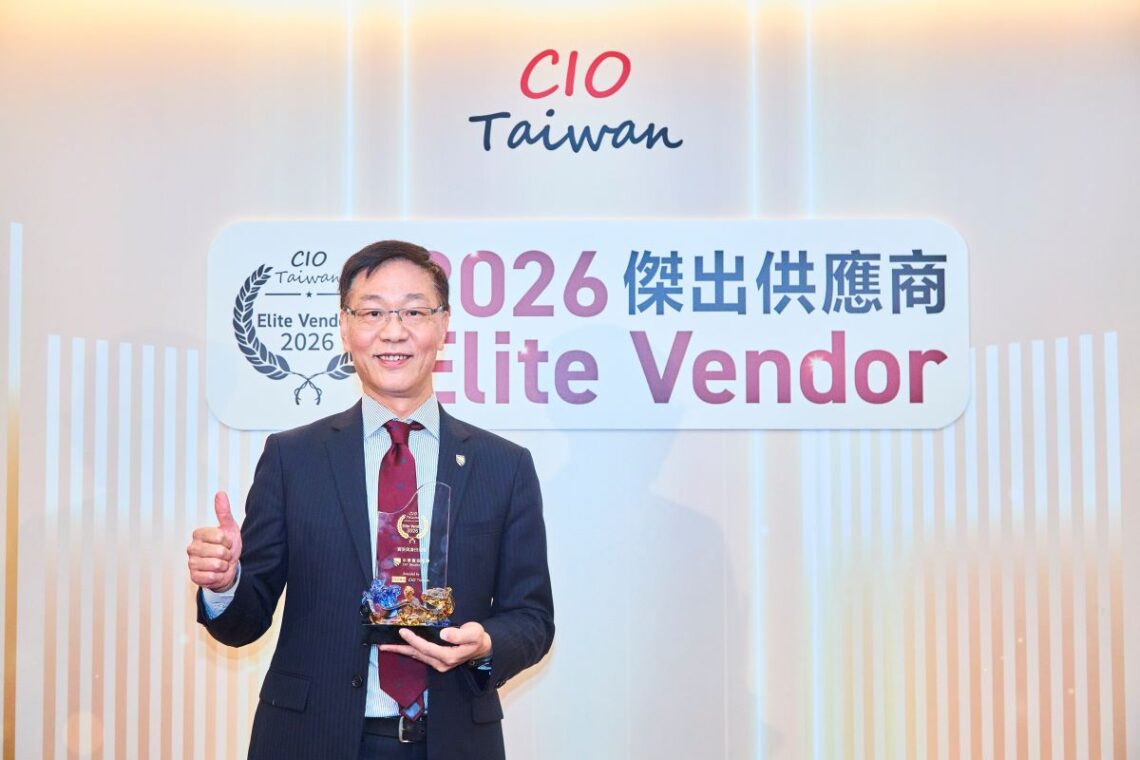
CHT Security, which went public last September, continues to strengthen its market competitiveness. This year, it was once again recognized in the 2026 CIO Elite Vendor awards, winning in the "Cybersecurity and Identity Governance" category. Beyond its deep roots in network security and SOC monitoring and response services, the company is actively expanding into emerging fields such as Cloud Security, AI Security, Drone Security, and LEO (Low Earth Orbit) Satellite Security, demonstrating its continuous growth in professional service capabilities.
The news on CIO Taiwan Magazine.